Science learning at St Michael’s is active, curious and closely linked to the world around us. Through the International Primary Curriculum, pupils meet science in many different units of work. They do not only read about ideas, they test them, question them and see what happens in real life.
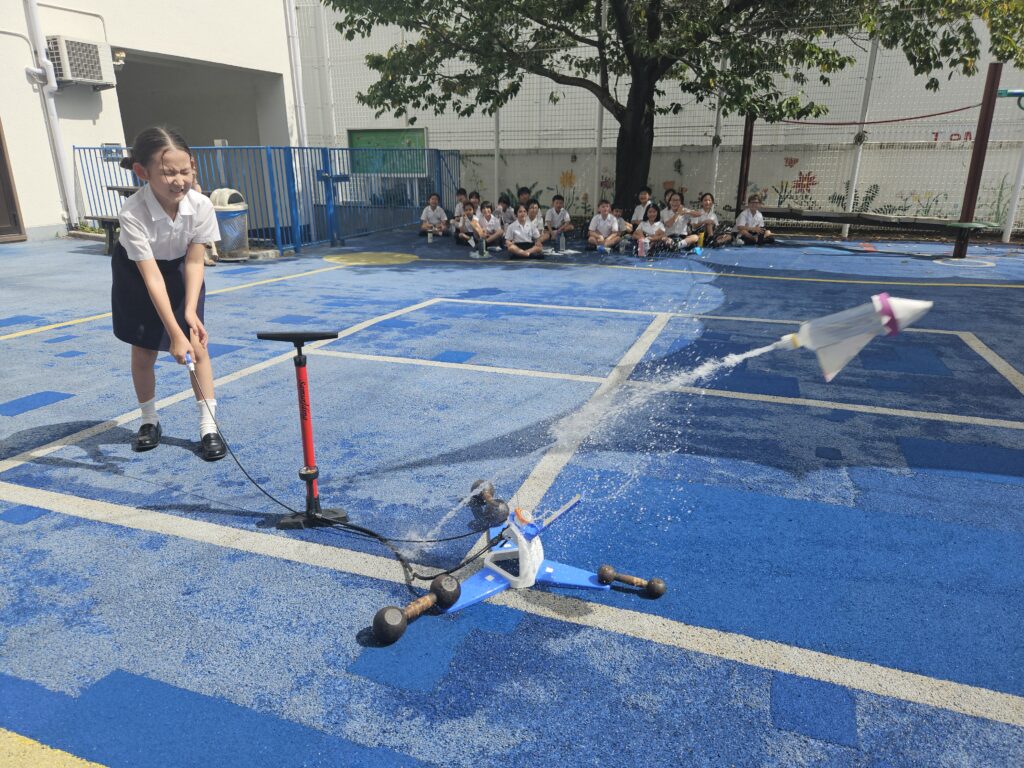
From the Early Years onwards, children explore materials, plants, light, sound and forces through hands on investigations. They might compare how different objects move down a ramp, test which material makes the best raincoat for a toy, or observe how plants grow in different conditions. Simple questions such as What do you notice and What do you think will happen next help them build the habits of young scientists.
As pupils move through the Primary years, their science learning becomes more structured. They learn how to plan a fair investigation, make predictions, measure carefully and record results in tables, charts and diagrams. In one unit they might investigate shadows and how the position of a light source changes their length. In another, they may explore the properties of solids, liquids and gases by heating, cooling and observing changes. Each investigation helps to deepen understanding of key concepts while strengthening skills in observing, comparing and explaining.
Practical science also supports important learning beyond the subject itself. Working in pairs and small groups, children must listen to others, share equipment and agree on steps. They learn to explain their thinking, to use correct scientific vocabulary and to respond to evidence, even when it does not match their first ideas. This builds confidence, perseverance and critical thinking.
For parents, the impact is clear when children talk about their latest experiment at home or ask new questions about everyday events. For pupils, science through the IPC offers the excitement of discovery and the satisfaction of finding things out for themselves. By combining a rich curriculum with regular practical investigations, we aim to develop both a strong scientific knowledge base and the skills that will help our learners understand and care for the world around them.