

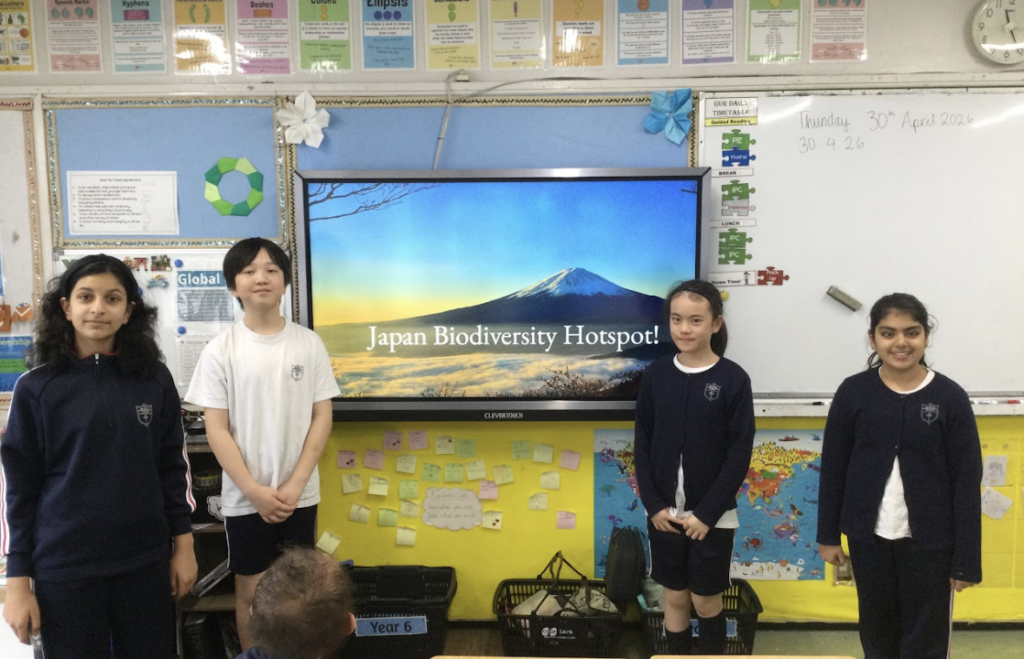
As part of their learning about the natural world and environmental sustainability, Year 6 have been investigating biodiversity hotspots, some of the most biologically rich yet most threatened places on Earth. Biodiversity hotspots are regions that contain extraordinary numbers of unique plant and animal species but face significant challenges from habitat loss, climate change and human activity. Through this unit of learning, students explored why these areas are so important and what can be done to help protect them.
Working in small groups, students selected a biodiversity hotspot from around the world and carried out collaborative research into its geography, ecosystems, wildlife and conservation challenges. They examined the factors that make these regions unique and considered the impact that environmental threats can have on both local communities and global biodiversity. The project culminated in a series of student presentations. Each group communicated their findings to the rest of the class, explaining why their chosen biodiversity hotspot matters and making a case for its protection. Learners demonstrated excellent research skills, teamwork and confidence as they shared their learning and responded to questions from their peers.
This learning experience encouraged students to think critically about environmental issues while developing their understanding of global citizenship. By exploring real-world challenges and possible solutions, Year 6 gained a deeper appreciation of the importance of protecting the Earth’s natural habitats for future generations. Well done to Year 6 for their thoughtful research, collaboration and commitment to understanding one of the most important environmental issues facing our world today.