
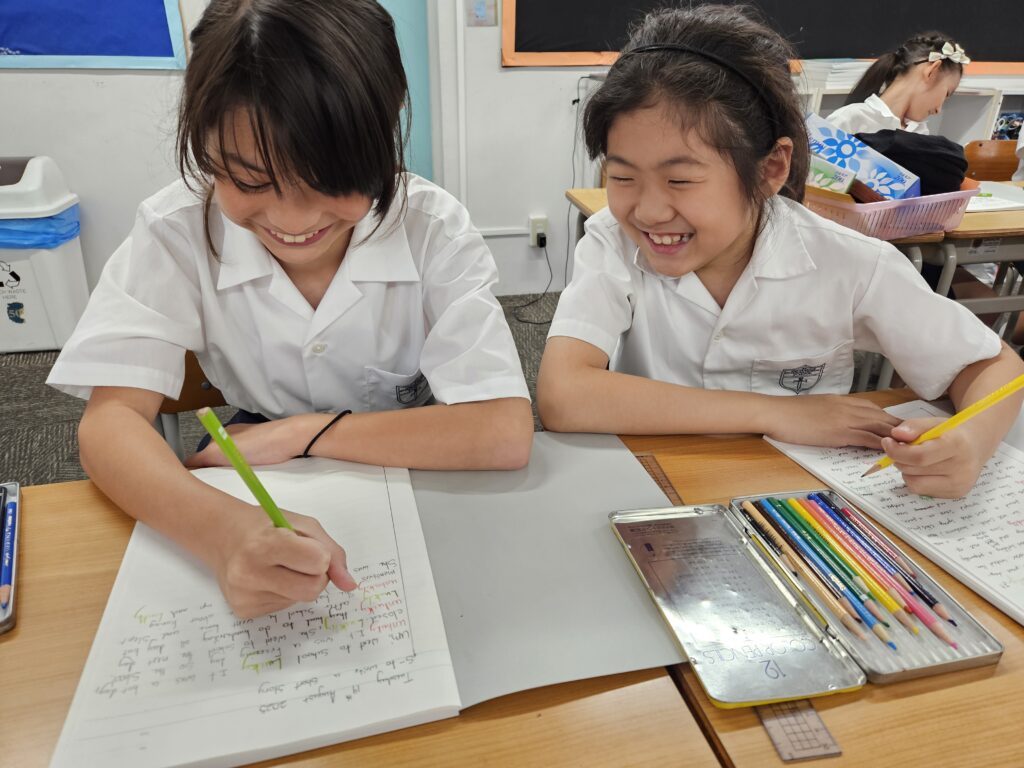
In a world where technology can generate text in seconds, it is easy to assume writing matters less. The opposite is true. Writing is one of the clearest ways children learn to think. When a child writes, they are not just producing sentences. They are organising ideas, choosing the right words, making meaning, and learning how to communicate with purpose. Writing builds clarity. It develops reasoning. It helps children reflect, explain, persuade and create. These are skills that technology can support, but never replace.
Writing also strengthens learning across every subject. A child who can write well can show understanding in science, history, geography and mathematics. They can describe a process, justify an answer, and present an argument. Writing turns knowledge into insight. There is also something deeply human about writing. It gives children a voice. It helps them tell their stories, share their opinions and make sense of their experiences. When children feel heard, they feel valued. That sense of agency matters in every classroom.
Technology will continue to change quickly. The need for thoughtful, confident communicators will not. That is why writing will always remain a core feature of learning at school. We teach it because it shapes how children think, how they learn, and how they connect with the world.